0115 704 3969

12th February 2019
By taking on such a breadth of new challenges whilst striving to develop my understanding and knowledge of Civil Engineering I have been able to implement what I have learnt to assist the team in providing clients with high quality, practical and economical solutions to complex engineering problems.
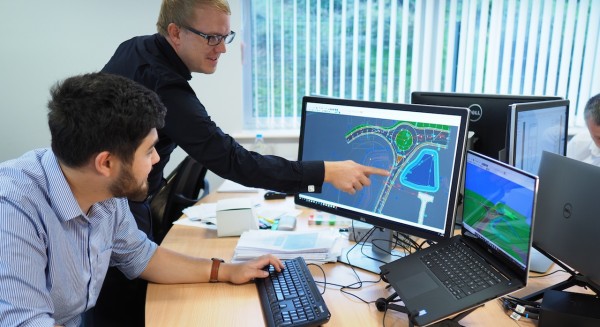
This wider perspective has also enabled me to find new ways of working such as utilising software designed initially for drainage to output useful and relevant data for use in a structural or foundations application, automating part of the process to improve efficiency and reduce the risk of human error when extracting complex information. It has also helped me to wear many hats when developing a drainage strategy, considering multiple viewpoints to find an optimal compromise which balances the multidisciplinary needs of a project.
Within PJS, the communication of ideas, concepts and technical information is critical to ensuring that all of the people involved in a project, from clients to colleagues and contractors, has a clear understanding of what is required. As a result of this, the use of high-level civil engineering software and the presentation of its output has been a critical component of the work I have undertaken.

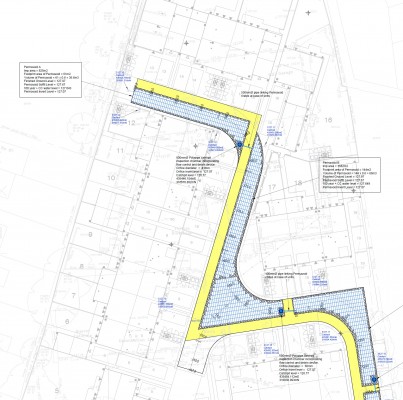

Generating clear cut/fill diagrams to illustrate to a client the effect of complex ground reprofiling or the amount of material required to take to or from a site can simplify what is an otherwise complex and very technical undertaking. The production of clear tree influence and constraints drawings helps to identify the limitations and potential problems that may be encountered further down the line.
In addition to this, I have been involved in the production of more technical reports such as Flood Risk Assessments and Technical Notes which address the more technical nature of civil engineering, recognising potential risks and incorporating guidance from stakeholders such as the Environment Agency and Lead Local Flood Authorities. This has allowed me to develop my understanding and background knowledge of the discipline, building a backbone of information upon which I can continue to broaden my knowledge and improve my capabilities as a Civil Engineer at PJS.
Thus far, I have enjoyed gaining such a breadth of experience, rapidly learning and applying knowledge.
Having the opportunity to get involved, find solutions and add value to the team rather than feeling like a small cog in an increasingly large machine, is one of the main reasons that I chose PJS after graduating from the University of Nottingham and it is a decision that I happily stand by and would recommend to anyone who has recently graduated or is soon to graduate.